Bugs Commonly Confused with Kissing Bugs

Bugs Commonly Confused with Kissing Bugs

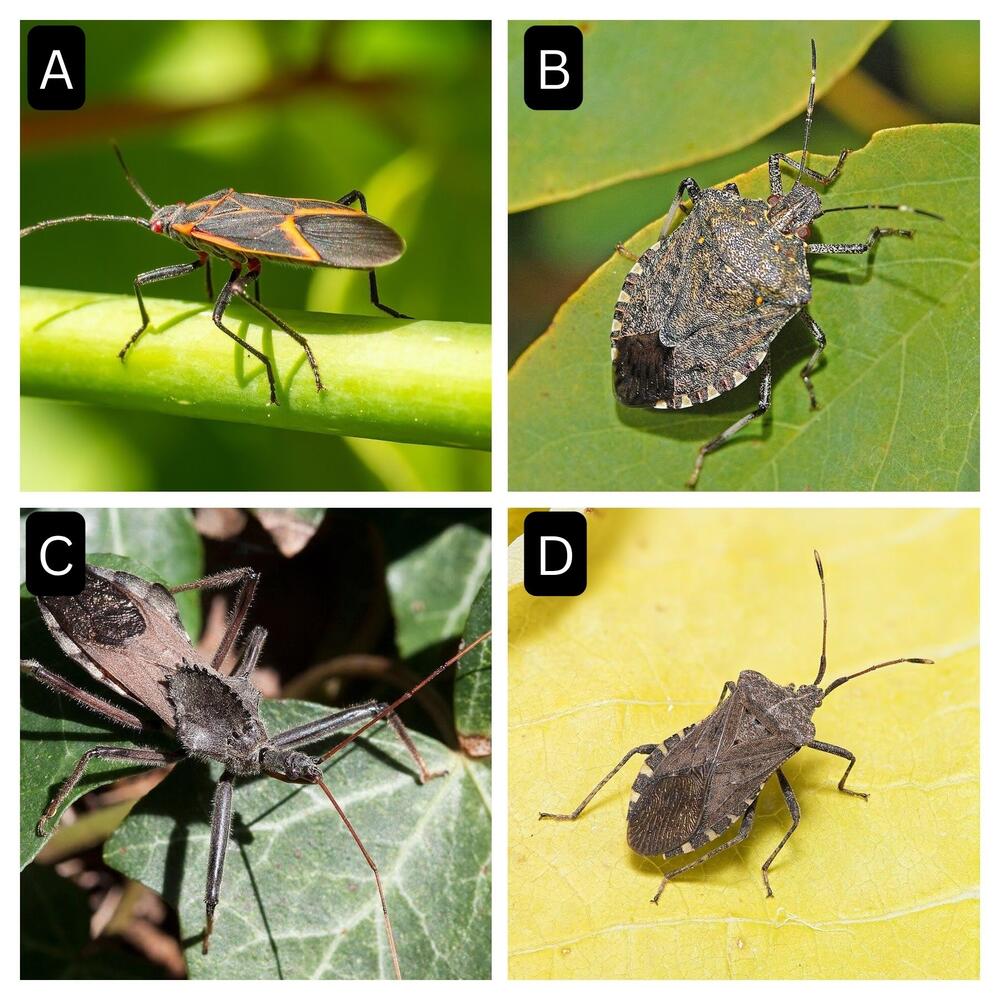
Every year, DPH gets calls from people worried they've found a kissing bug. Most of the time, the bug turns out to be something else. Kissing bugs have a cone-shaped head, long thin antennae, and a flat, shield-like back with orange or red stripes along the edges. Several other bugs in Georgia look similar and are often mistaken for them. The boxelder bug (A) has a narrow black body with bright orange-red lines and is often found in groups on trees or house siding. The brown stink bug (B) has a wider, shield-shaped body with mottled brown and gray markings and banded antennae. The wheel bug (C) is a large, spiky-legged bug with a distinctive gear-shaped ridge on its back. The squash bug (D) has a long brown body and flattened, leaf-shaped hind legs. None of these bugs spread Chagas disease.

Four-panel labeled photo collage of true bugs (Hemiptera) commonly mistaken for kissing bugs (Triatominae)
Caption
Bugs commonly mistaken for kissing bugs (Triatominae). A: Boxelder bug (User: Rhododendrites / CC BY-SA 4.0) B: Brown stink bug (User: Hectonichus / CC BY-SA 4.0) C: Wheel bug (Ryan Kaldari / Public Domain) D: Squash bug (Carlos Valenzuela Montuy / CC BY 4.0)
Wikimedia Commons

If you are curious about your exposure to a kissing bug, you can submit a photo through the Georgia Bug Identification Program form below. This identification service is free.

Georgia Bug Identification Program

Georgia residents may submit photos and brief description online to get a bug identified to see if they have been exposed to a kissing bug. There is no charge for this service, but it is only available to Georgia residents.