t_sanguisuga.jpg
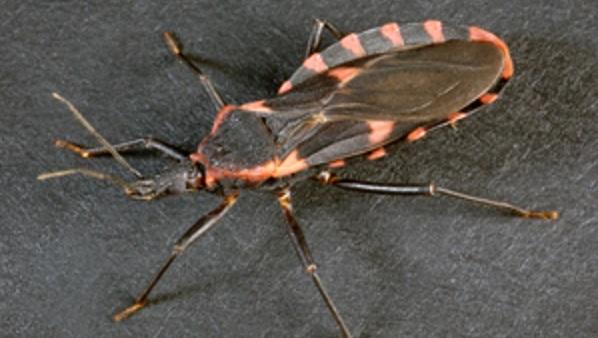
Caption
Kissing Bug (T. sanguisuga) CDC Media
An official website of the State of Georgia.
The .gov means it’s official.
Local, state, and federal government websites often end in .gov. State of Georgia government websites and email systems use “georgia.gov” or “ga.gov” at the end of the address. Before sharing sensitive or personal information, make sure you’re on an official state website.
Still not sure?
Call 1-800-GEORGIA to verify that a website is an official website of the State of Georgia.
Chagas disease is an illness caused by a tiny parasite called Trypanosoma cruzi. Most people who have Chagas got it in parts of Latin America from infected triatomine bugs, also called "kissing bugs." These bugs poop after they bite. If the poop gets rubbed into the bite, or into your eyes or mouth, the parasite can get into your body.
Chagas disease can also spread in other ways, but this is rare. It can pass from a pregnant person to their baby. It can also spread through blood transfusions, organ transplants, or contaminated food or drinks.
At first, many people feel fine or only have mild symptoms, like a fever or feeling tired. But years later, some people can develop serious heart or digestive problems, especially if the infection was never treated.
Chagas disease does not spread through everyday contact with other people. There's no need to keep someone out of school, work, or daycare because of it.
Chagas disease has two stages: acute and chronic.
The acute stage happens right after infection. Many people don't notice any symptoms. Others may have a fever, feel tired, or have swelling near the bite. If the bite was near the eye, the eyelid may swell. These symptoms usually go away on their own within a few weeks.
The chronic stage can happen years or even decades later. Most people never develop symptoms. But in about 20-30% of people, the parasite can damage the heart or digestive system over time. This can lead to an irregular heartbeat, heart failure, or an enlarged esophagus or colon that makes it hard to eat or digest food.
Triatomine "kissing" bugs can spread Chagas disease. The infection doesn't come from the bite itself. Instead, the bug poops (defecates) near the bite, and the parasite in the poop can get rubbed into the bite, another open area of skin, or the eyes or mouth.
Kissing bugs live in Georgia, but they have not been found to spread the T. cruzi parasite that causes Chagas disease as easily because they have different habits (defecate off the host).
Additionally, many insects that people worry might be “kissing bugs” turn out to be other kinds of bugs. If you are curious about your exposure to a kissing bug, you can submit a photo through the Georgia Bug Identification Program form below. This identification service is free.
If you think you have symptoms or exposure and should be tested for Chagas disease, talk to a healthcare provider. They can assess your symptoms and order testing either through the state health department or a commercial lab. All Chagas testing requires a blood draw submitted to a laboratory and can take about 3 weeks for results.
Chagas disease can be treated with antiparasitic medicine. This medicine works best when it's given soon after infection, during the acute stage. It can also help some people in the early chronic stage.
Once someone reaches the later chronic stage, medicine may not clear the parasite, but a doctor can still treat the heart or digestive problems it causes. This is why early testing and treatment matter.
You can lower your risk of Chagas disease by: